

In this newsletter:
📝 Post: Where Should We Draw the Line with AI?
🗞️ In Case You Missed It: Tech Highlights
😎 Pick of the Week: Fashion Picks
📦 Featured Product: Ubiquiti UniFi UNVR
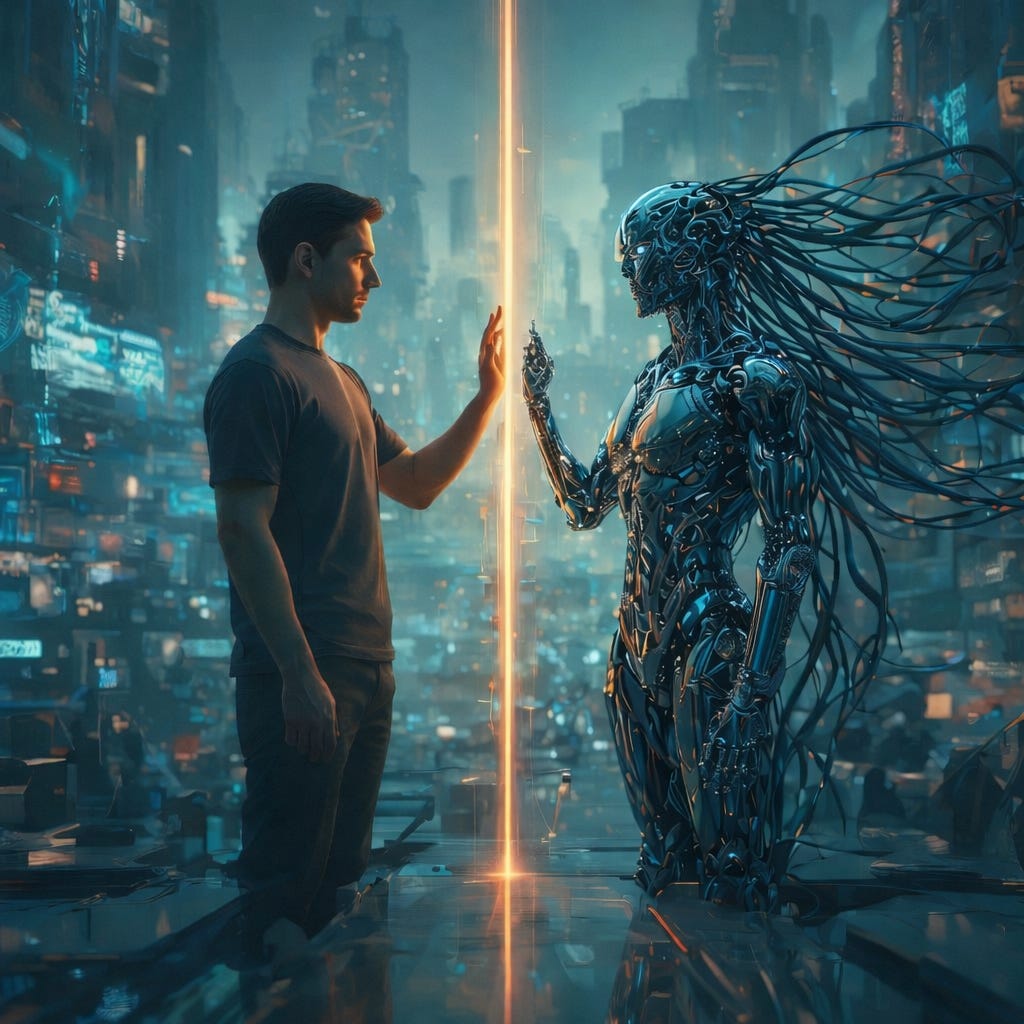
📝 Where Should We Draw the Line with AI?
I think it’s safe to (continue) to say that it feels like AI is taking over all pieces of software we use not only in our workplace, but in our personal apps, too. With the development of the infamous Clawbot that allows anyone anywhere to build their own AI assistant, many companies are trying to build their own before becoming obsolete - or at least lose market share and/or customers.
The more AI tools and integrations we’re seeing popup, the more and more niche they are becoming. A prime example is Grammarly, who has been in the news the last few weeks. After a buyout back in the fall of 2025, Grammarly Rebrands Company as Superhuman. Superhuman started as an AI-enabled email and writing company of sorts themselves, so Grammarly is a great company to team up with.
Soon after the purchase, they launched a new AI assistant with an “expert review” feature. The problem, however, is this feature wasn’t properly vetted, and now a writer is suing Grammarly for turning her and other authors into ‘AI editors’ without consent. Grammarly pulled the tool after backlash, but now there’s this lingering question out there for the courts to decide on.
Where does AI fall on the line between copyright and free speech? Or to steal a term from the sports world - where does NIL (Name, Image, and Likeness) fit in? At its core, this isn’t really a question about AI. It’s a question about ownership. Who owns the style, voice, or likeness in a world where machines (or other humans) can replicate them?
I would argue that as a whole, AI just allows a user to exponentially expediate what they have the capability of doing, just not the time or energy. AI is just doing what you would or could do, but exponentially faster. It’s not creating any new capability (arguably). It amplifies existing capability (and creativity) at a speed technology has only recently allowed and available to the masses.
For example: I could read every work written by a given author/writer/etc, and then write a completely new piece of content that could appear written by that person. Even if it was on something they would have never written about - their style, word choice, and more can be mirrored.
On the other hand, AI can do that exact process in less time than it would take for me to write the prompt. And for an example, a prompt may look like: “Pretend you are William Shakespear. Write a completely new play about two people who fall in love, but they are so engrossed in their mobile phone ecosystem of choice, they can’t bear to switch, and ultimately separate. Use the language and style similar to Romeo and Juliet and Hamlet.”
As absurd as it is, I hope the point is understood. The same prompt could be made for any new stories in the style of J. K. Rowling or Stephen King. Except, here we start to find the gray area around copyright (or NIL). Anyone of high school age can understand plagiarism, but that isn’t necessarily what we’re talking about. I mean, FanFiction was a thing even before AI was a twinkle in the developer’s eyes. But still, we know where the line is. And I hope we can all agree it doesn’t look good for Grammarly when the app was appearing to have some sort of collaboration with the writer(s) in question even if they had a disclosure statement.
Which, again, leads us to something else in this same thought process. Remember when Meta Launched AI Chatbots for Celebrities like Snoop Dogg, MrBeast, and Tom Brady? No one ever thought they were actually talking to those people, did they? But I bet most people at least assumed the celebrities in question received some sort of payment. Well, at least a few of them helped with the announcement, so… there’s that.
I don’t know what the answer is here. But I do think however the courts choose to rule, something will have to change, and each decision comes with its own nuanced issues. Writers may have to opt in (or out) of letting the LLMs use their data. Writers may choose to pay-wall all of their content to keep LLMs from scraping everything - which isn’t good for the masses and has other issues. Or, maybe writers simply stop writing and find other jobs and sources of income?
Maybe the real question isn’t whether AI can replicate someone, it’s whether or not it should be able to. Or who gets to decide if and where the line is drawn. The technology is already here, the courts are just trying to catch up. So, where do you think the line should be between creativity and inspiration?
🗞️ ICYMI: Tech Highlights
Chaofan Shou on X.com appeared to be the first to report that Claude code source code has been leaked via a map file in their npm registry and was posted onGithub (amond tons of other sites). It appears the Entire Claude Code CLI source code leaked thanks to an exposed map file. After verifying no sensitive data was exposed, they issued over 8,000 takedown requests across the web.
In their own article, Wikipedia explains how to write articles with large language models. Spoiler, AI is not allowed to write or update articles, only for basic copy edits.
One of the biggest announcements many have been waiting to go live, You can finally change the goofy Gmail address you chose years ago.
Tesla, SpaceX Plan to Build New Chip Factory in Texas.
😎 POTW: Fashion Picks
I’m not big into fashion, but I did enjoy Mrwhosetheboss’s YouTube video where he Tested Nike’s Top Secret Shoe. As someone who created (and wears) their own ‘uniform’ to work everyday, I do aspire to take Steve Harvey’s suggestion one day - the only 5 suits you need. Until then, check out these fashion picks I’ve been saving up.
7 Style Tips for Large Men: The Big Man’s Guide to Sharp Dressing
31 Days of all the tips and tricks needed to shape up for 2026
This is how to pack a suit in a carry-on (without a wrinkled mess)
The rules of wearing a double breasted suit: Your complete guide
The Story Behind the Boldest Season of Golf Style in Forever
📦 Featured Product
A while back I made a post on Everything You Need to Know About Home Security Systems. In there, I shared a few camera systems and brands available depending on if you want hardwired, wireless, or a mix. I always suggest hardwired as best you can, but the Network Video Recorders (NVR) are sometimes camera brand specific - meaning you can’t mix and match other cameras. The software is also rough sometimes, too. The Ubiquiti UniFi UNVR will allow connecting other branded cameras, although this is hardwired cameras only. Depending on availability on Amazon, you may have to purchase on the UniFi website. They also offer Android and Apple apps. On the Apple side, this app works on a iPhone, iPad, Apple TV, or the Mac. But either way, there app is typically fast to load and has some of the best scrubbing of video I’ve seen.
