

In this newsletter:
📝 Post: Why Is AI So Good at Some Problems and So Bad at Others?
🗞️ In Case You Missed It: AI Updates
🗞️ In Case You Missed It: Price Hikes
😎 Pick of the Week: Presidential Picks
📦 Featured Product: Casio Ollee Watch
📝 Why Is AI So Good at Some Problems and So Bad at Others?
Have you ever tried to use AI and just weren’t happy with the result? Or maybe you use it often and think sometimes it’s the greatest thing since sliced bread and other times an 8-year-old could give you a better answer? And they wouldn’t be a sycophant about it. I don’t know about you, but I get tired of AI chatbots excessively agree with me and always saying what it “expects I want to hear.”
With all of the changes in AI across the many companies involved creating their own chatbots, what they can and can’t do change pretty frequently - even in their responses to the same question or prompt given to a previous model. However, regardless of updates, I’ve noticed that AI thrives in one of two areas that couldn’t be further apart.
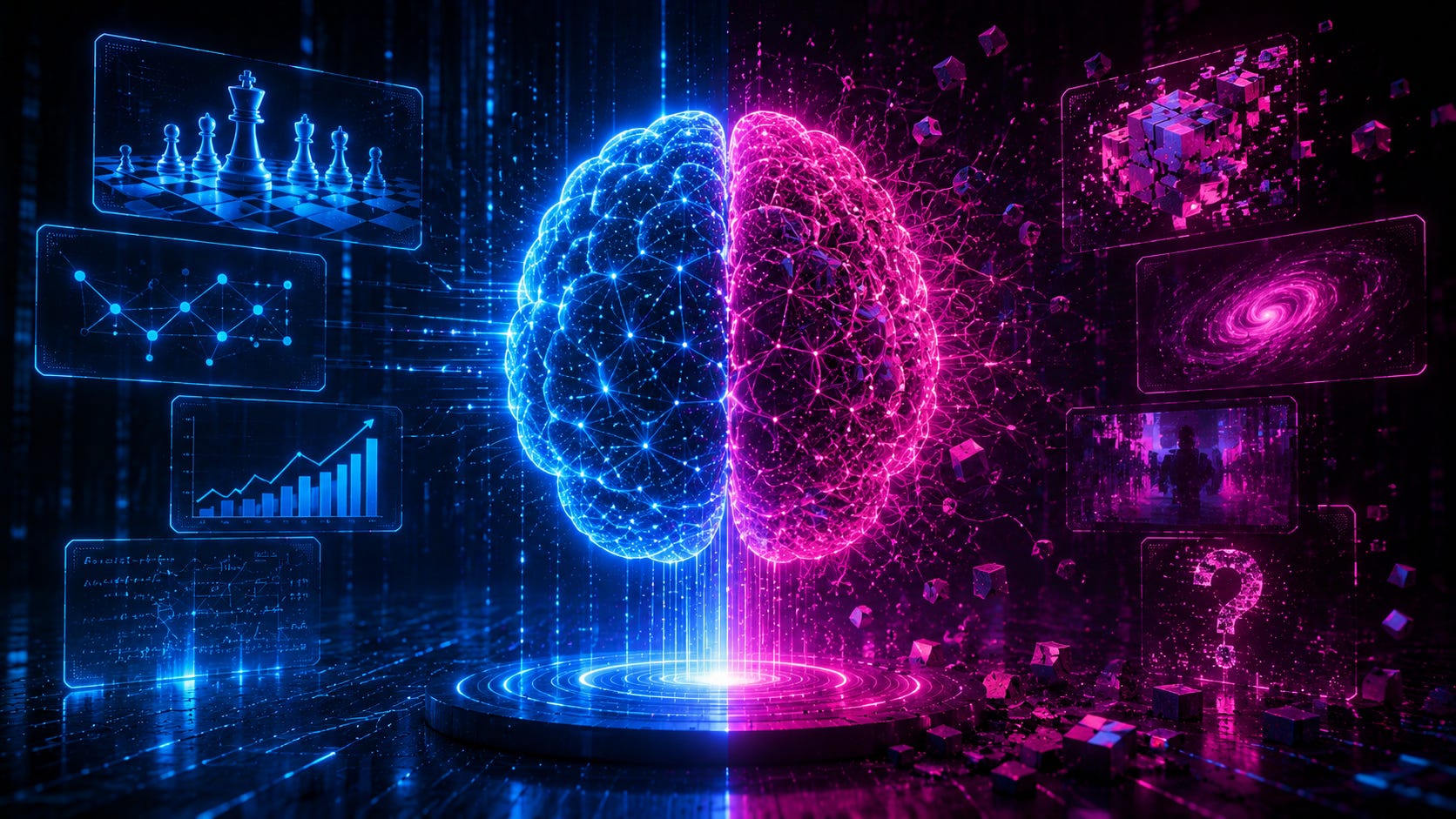
First, AI, also referred to sometimes as Generative AI, excels in ‘generating’ new things. This includes all forms of writing, graphics (images and video), audio, code, and even idea generation. The kicker here - is this only revolves around things that have no correct answer. Meaning everything is creates should be (at some level) sufficient for what the user wants but is subjective on “how good” it actually is.
At this end of its parameters, one could argue AI is a form of an artist. However, all artist (regardless of the medium) have a personality, and success is very subjective as mentioned. AI also has a personality (as do artists), but it can be easier for a human to sniff out. Here, AI doesn’t have to produce the correct answer, only a useful answer.
On the other end of the spectrum, AI excels (generally) in taking in a ton of information, distilling it out, and providing an answer when there is only one answer to give. The kicker here - is it needs all information, or at least as much access as possible to all information, required to make a decision. Meaning every answer it gives should be very black and white.
At this end of its parameters, one could argue it’s not even AI, it’s just a robot blindly completing a task. And this is probably a good take, but in this case, AI is doing a lot more compute than just [if this is X, then the answer is Y]. Here, I would argue that AI is literally doing the same exact thing a human could do, it would just take a human weeks, months, if not years. Pattern recognition falls under this category, too.
Where AI falls short and gets things wrong more often than not, is in the middle. If it doesn’t have all of the required information, or if there are multiple (potentially) correct answers, AI can struggle to provide a great response. These types of scenarios require tradeoffs, considering intuition, values, a level of uncertainty, and most important - judgement. Example scenarios that fall here may have multiple right answers. And in most cases, there also aren’t an unlimited amount of answers, either.
You know who else struggles with scenarios that have multiple correct answers if information is missing? Humans! The difference is that humans have lived experiences, understand empathy, accountability, intuition, and much more.
So be careful when prompting, and make sure you know what you’re actually asking. Are you wanting the one correct answer, some generated answers, or are you possibly requesting a level of judgement. For friendly reminder, check out one of my older posts about How to Make AI Work for You with the Power of Prompting.
AI performs best at the two ends of the spectrum, when there are countless acceptable answers, or when there’s only one. The hardest problems aren’t typically either one of those. They’re the ones in the middle. And these decisions require complete information, competing priorities, and human judgment. Those are the scenarios where AI should be remembered as a tool for helping you get to the right answer - for you, and for your specific scenario.
🗞️ ICYMI: AI Updates
While I wrote about how often AI changes in regard to prompting and its response, something else that also changes is the teams behind them. One of the most popular companies, OpenAI, is known to make significant changes, and pull from competitors. First up, they hired Apple’s Vision Pro and Smart Glasses Chief, then the Google Gemini co-lead Noam Shazeer.
Unrelated, but Google makes Gemini’s personalized image generation free for all US users - something you may want to take advantage of if you do not have an AI subscription elsewhere. The Nano Banana image generator is a popular tool across the web consistently putting out great work that many people talk up.
🗞️ ICYMI: Price Hikes
In a long list of price increases across the tech world, Apple announces significant price increases for MacBooks, iPads, more. Noting the surge in pricing for the costs of memory and storage chips, the price for Macs, iPads, and other hardware rose anywhere from 15%-25%. Missing from the price adjustments is the ever-popular iPhone lineup. While time will tell, in the short term, Apple stock sunk 6% after the price hikes.
On the gaming side, Microsoft Announces Significant Price Rises for Xbox Series X and S, while discontinuing the highest storage model. One of the most anticipated games of the decade, Grand Theft Auto VI, is finally allowing preorders for a November 19 release date. And it’s topping the charts for pricing, too. Sure, you can purchase the Standard Edition for $79.99, but without spending the extra $20 for the Ultimate Edition, you will literally be locked out of physical locations within the game.
😎 POTW: Presidential Picks
As the U.S. continues to celebrate its semiquincentennial, how about some presidential picks?
📦 Featured Product
After talking with a few readers, I think one of my previous “products” that was called out in the tech headlines deserves it’s own product showcase. An electrical engineer I saw on Reddit developed the Ollee Watch. It’s a circuit board you can buy to turn your classic Casio watch into somewhat of a smartwatch. It works well with the Casio F91W Series, among a few others. It includes extra features from a normal Casio like snooze alarms, sunrise/sunset tracking, steps tracking, and an *astericks* version of heart rate and temperature. There are some caveats to those two. It has up to 10 months of battery life at normal use, with over 3 years in power save mode and motion sensors off. Notifications are planned, but no release time set yet.
