

In this newsletter:
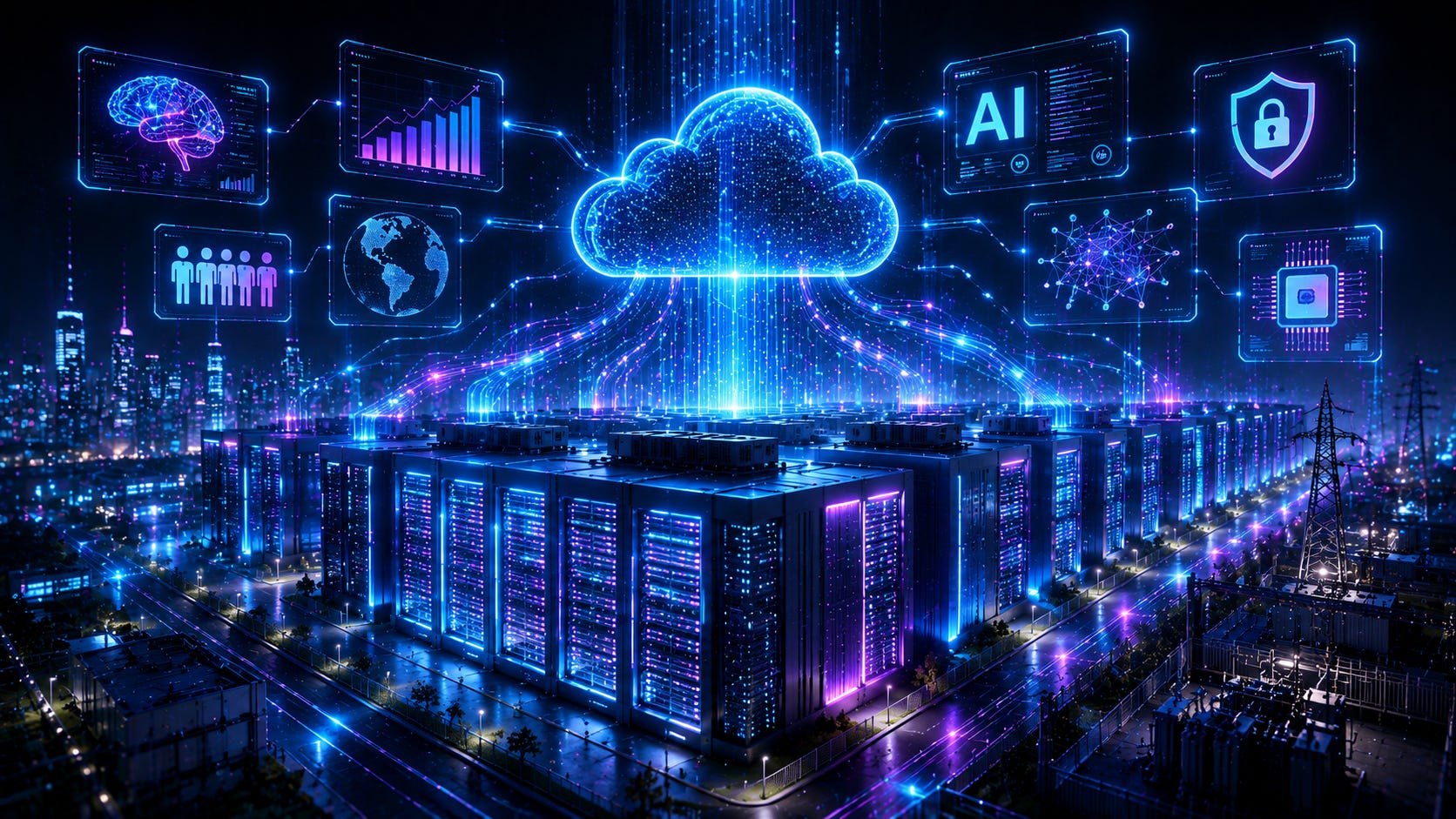
📝 Post: Why Are Companies Suddenly Building So Many Data Centers?
🗞️ In Case You Missed It: Google Updates
🗞️ In Case You Missed It: Tech Headlines
😎 Pick of the Week: New York City Picks
📦 Featured Product: Desk Pads
📝 Why Are Companies Suddenly Building So Many Data Centers?
If you have browsed the web either on news sites or on one of the plenty social media sites available, you’ve probably heard many of people, businesses, or even all levels of government (city, parish/county, state), talk about companies building massive new data centers across the country. Recently, it was reported that Meta’s Giant AI Data Center Is Reshaping Rural Louisiana. There have been talks of others not just in Louisiana, but across the south where the demographics and infrastructure help. This includes an area in need of/or possessing an industry, an abundance of land, and an ability to access or build (inexpensive and consistent) energy (e.g., water, solar) that has somewhat central access to an internet grid.
So, what exactly goes inside these buildings, and why do we suddenly need so many of them?
That’s an easy to understand, but difficult to master type of question that has a lot of nuances and many moving pieces - including political ones. However, put simply — every time we stream a movie, upload a picture, scroll on social media, play a podcast, or ask one of our many AIs or virtual assistants a question, we are demanding more computational power. And the more and more people that do this at scale, the more data centers will be required to sustain this access, speed, and expectation.
Be honest, how long would you give a YouTube video or TV show to load (or buffer) before you’d decide to move on to something else? That will only get worse and worse as more people come online if we have no data centers to support them. To be clear - I’m not talking about internet speed here. I’m talking about what your internet connects and talks to in order to give you the information you’re asking for.
We talk about “the cloud” as if it exists “somewhere in the sky,” but in reality, it exists on very real and very physical hard drives store in a random location across the country. Moving the physical storage to a different country would not be feasible for privacy/security sake, but also for speed and access. To dive a bit deeper here, check out my post on Understanding Where Your Data Lives and How the Cloud Works.
These data centers are essentially a bunch of computers. CPUs, GPUs, RAM, Hard Drives, and Power Supplies. They require a lot of energy to power the chipsets, keep the hard drives running, and also keep things cool. These data centers’ computers also host websites, run applications, help with your backups, and much more. An AI data center includes many of the same types of hardware, but requires much more processing power, and by extension - electrical power.
In my last post, I tried to attack the question of What Happens When AI Can Take Action? because the AI models are actually ‘shrinking’ enough to be very powerful just by using our device’s processing power locally, without needing internet access to pint an AI data center. The problem is it doesn’t appear that shrinking and speeding them up is still keeping up with demand. On the other hand, looking at the LLMs price vs performance over the last 3 years, we are getting faster AI models that cost less. In many cases, the new version is quicker/faster/etc and cost less than its predecessor.
As the performance increases with a drop in cost, the demand has surged. Some businesses even require their employees to use AI in their jobs. We as a society have started to paint ourselves into an AI (and by extension, data center) corner where we have two ways of looking at this, and both are a much bigger conversation to have:
If AI succeeds, will we have massive job layoffs?
If AI fails, will we have massive economy collapse?
While this is very argumentative, the next time you wonder why companies are continuing to build massive data centers, start by looking at your own screen time. These buildings (must) exist because we use the services they offer made possible by the storage and power they require. The digital world we knew as “the cloud” for many years is starting to become very physical.
🗞️ ICYMI: Google Updates
Google released Android 17, but it looks to only -currently- be available on Pixel devices. See how You can get Android 17 on non-Pixel devices. **Check out what’s new, or watch 9to5Google’s video on Everything new in Android 17!**
Google has filed a lawsuit against Outsider Enterprise, a China-based cybercrime network for using AI tools, including Gemini, to build phishing websites and scam infrastructure.
Google also released A New Google Home Smart Speaker. It’s priced at $99, built specifically for Gemini for Home, has upgrades speakers for a broader range of sound and bass, and can be paired for surround sound.
The ‘unsaid’ part of this product (and other Google products) is they’re trying to get users to opt in to one of their Google Home Premium plans. But if you plan to sign up for Google Home Premium (Standard) plan ($10/month), and are in the Google space at all, consider a Google One - Google AI Pro plan. It comes with 5 TB of storage, higher levels of Gemini usage, Google Home, and YouTube Premium for $20/month.
🗞️ ICYMI: Tech Headlines
AI
AI Startup Midjourney Pivots to Health With Ultrasound Machine
Using OpenAI to help physicians diagnose rare genetic diseases affecting children
Entertainment
Everything Announced at Nintendo Direct June 2026 including a new Nintendo Switch Sports Resort for the Switch 2 launching on 22 October.
Fox Is Buying Roku in a $22 Billion Deal that will close in the first half of calendar year 2027.
Snap unveils $2,195 Specs AR glasses, read more about them in their announcement.
😎 POTW: New York City Picks
I’m a big fan of visiting New York City, so I’m always looking for a reason to share some Big Apple picks! So, in honor of the Knicks winning the NBA Championship and the city hosting FIFA this summer, how about some fun picks to go along with it!
Find a restroom through Bano NYC, NYRestroom, or PeePass.
Also, a popular NYC YouTuber, Casey Neistat has picked up steam posting videos a few times a week, and Subway Takes with Kareem Rahma was posted front and center in a Vanity Fair article where they were dubbed, “the new wave of late night”. He also started a new series called Keep the Meter Running where he basically asks a cabbie to take them to their favorite place - to which they continue to go all out.
📦 Featured Product
Whether your home office or place of business needs some desk swag, consider a Desk Pad. This essentially gives you a much larger mousepad that you may also place your keyboard on. There are tons of varieties of art, minimal colors, practical information, or let you show support for your favorite [insert team, brand, etc]. Here’s a few examples:
