

In this newsletter:
📝 Post: Are APIs the Waiters of the Web?
🗞️ In Case You Missed It: TikTok and Microdrama
🗞️ In Case You Missed It: OpenAI and Google
😎 Pick of the Week: Movie Picks
📦 Featured Product: Nix Mini 3
📝 Are APIs the Waiters of the Web?
Just last year, I talked about The Power of Automation Software to Upgrade Your Workflows and mentioned how an API (Application Programming Interface) helps multiple pieces of softwares communicate with each other.
Put simply, developers of (generally larger) software companies create APIs that other developers (or softwares in this case) can take advantage of. Essentially, these APIs allow one software to control another. But in a very limited sense. When a developer creates an API for their software, it provides very specific commands that other softwares can use to control it. These may include adding an item, updating an item, performing a search, or much more. Most of the services I listed in Weekly Wheaties #2522 are using APIs on the backend of their software.
So, why does this matter?
Well, in recent times, API use and behavior have absolutely changed with the advent and use of LLMs and AI. Any app you see that is considered an AI chatbot, has AI-enabled within its app, or has been vibe-coded in some way, is probably using APIs. OpenAI’s ChatGPT has a section of their app called Explore GPTs, where anyone can build a GPT within ChatGPT. These are the low-hanging fruit examples of an API, but they are still basic examples.
ChatGPT and many other apps (not even AI related) even use a fairly basic API for you to log in or create an account - Sign in with Google. Every app that does this isn’t creating their own login page, they are using an API provided to them by Google. This is also possible with Apple, Facebook, and other systems that use the “Login with…” feature.
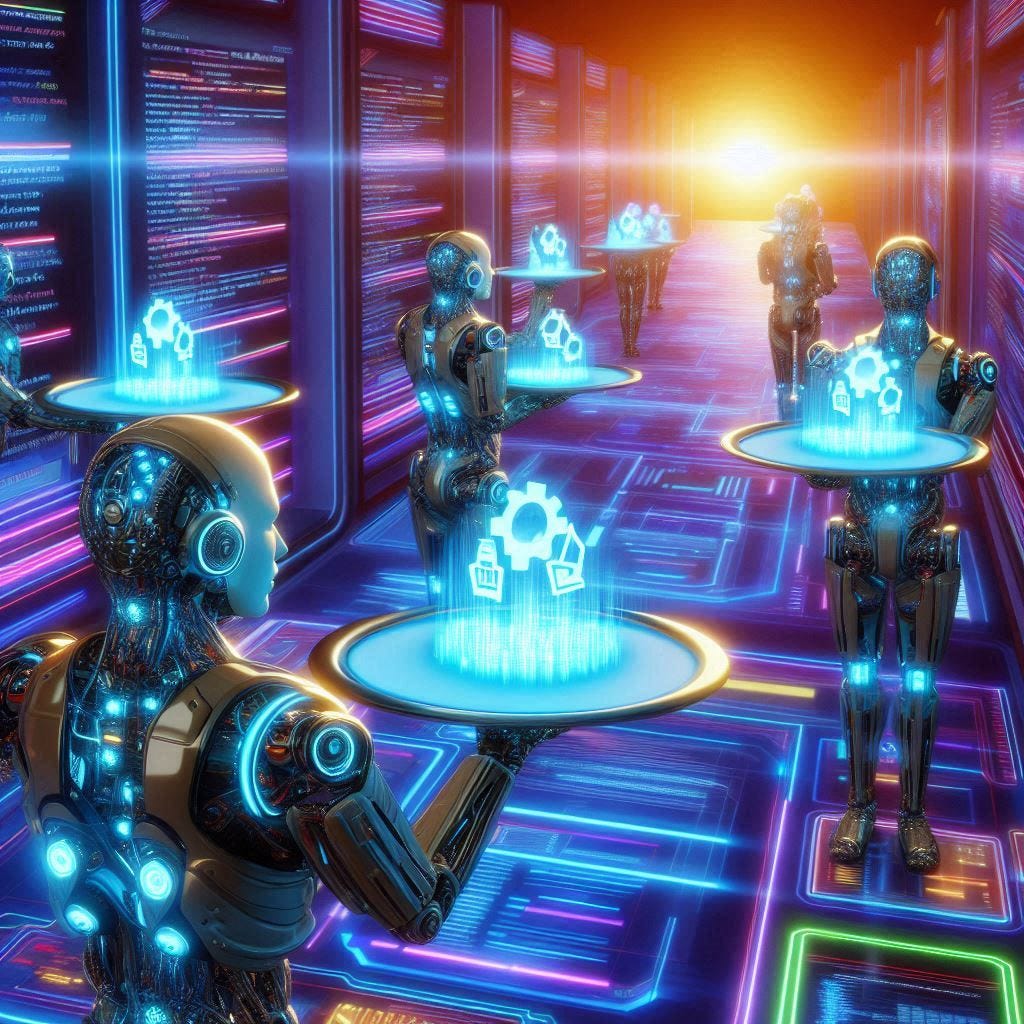
For a bit more fun, and adding to last week’s post, let’s now explain APIs using the food theme. At a high level, if a chef is comparable to an LLM, an API can be compared to a waiter in a restaurant. They take orders, relay the order to the kitchen, and deliver what was ordered. They cannot change how the kitchen works, or deliver something not in the kitchen. Only pass on requests and return results.
When apps speak to an API, they have a set of rules they must follow (similar to a menu from a restaurant), and can only access and deliver information within the app they have access to. We could go even further and say in the restaurant example, you could also imagine the waiter wasn’t a physical person, and instead was the intermediary between the customer and the kitchen in a digital sense - through the customer ordering their food through an app. In this case, there is a limit on what is allowed to be asked of the kitchen.
As you can see, these APIs exist to help softwares and the companies that use them to edit or share information without allowing end users full control or access to the entire system. By having rules in place, they are also not allowed to ‘click around’ and break something. This control also helps when systems are updated, preventing disruptions to communications and access.
In comparison to an app or a website, they are able to utilize APIs in order to give their software more features. This matters for typical consumers, because it is important to at least have some basic understanding of how many of these services interact and communicate. Both for our security and convenience. A more obvious example you use online all the time is when you purchase an item or service.
On the backend of all transactions is a payment processor. These include PayPal, Venmo, CashApp, and other person-to-person processors you may use with friends and for some online purchases. But for larger businesses, their payment processors utilize APIs from Square, Stripe, Toast, and many more. This allows them to receive payment via credit cards and keep all personal information private and secure - not only for you, but for them, too.
Just like a waiter can’t redesign the kitchen or ask the chef to cook something not in the pantry, APIs don’t give apps unlimited power. They only provide access that they were designed and allowed (by you) to have. So the next time an app, website, or service asks for permission to access your data, it’s worth pausing to think to yourself if it actually does need it. Ask “What are they asking for? What will this give them? Does this [app/website/service] need that access?” Remember, it’s a mix of convenience and security.
🗞️ ICYMI: TikTok and Microdrama
Last week, TikTok quietly launched a microdrama app called ‘PineDrama’. You can download it on Android or iOS. If you aren’t familiar with this type of entertainment, YouTubers Colin and Samir did an interview on How These 1-Minute Movies Are Making Billions. Here’s a list of 22 other apps if this is something you find interesting and would like to watch more.
In other drama news, how about The A.I. Start-Up Soap Opera Riveting Silicon Valley? Where employees left OpenAI to start Thinking Machines Lab, only to have drama rise and cause some to return.
Lastly, **X open sources its algorithm while facing a transparency fine and Grok controversies. This should help (for better or worse) show how the algorithm** filters out certain kinds of posts, including violent and spam posts, or changes the For You page to arguably show more/less of the creators you follow.
🗞️ ICYMI: OpenAI and Google
After expanding the ChatGPT Go Plan for $8/month worldwide, OpenAI also announced revenue figures. In the last 3 years, their revenue rose from $2B in 2023, $6B in 2024, and $20B+ in 2025. The computing power has followed closely, but they are expected to burn through $17B in 2026. The Economist calls this “one of the big bubble questions of 2026.” Not to mention, Musk Seeks Up to $134 Billion Damages From OpenAI.
To potentially help with some of their profit margins (or to at least not be so much in the red), you can read their **approach to advertising and expanding access to ChatGPT. Put simply,** “In the coming weeks, we’re also planning to start testing ads in the U.S. for the free and Go tiers.” At least those 3 years made a difference in how Will Smith eats spaghetti.
Four days before OpenAI released their statement, A Google VP explains why ads make sense in AI search but not Gemini — yet. So if you are still using a free AI chatbot and don’t want ads, you may have to leave ChatGPT for Google Gemini (or something else mentioned in Weekly Wheaties #2526).
Google also released their From the CEO: What’s coming to YouTube in 2026. This includes a push for “every format on every screen,” customizable multiview, new YouTube TV Plans (which include sports, entertainment, and news plans), and combating spam, clickbait, and reducing the spread of low-quality, repetitive content (AI slop included).
😎 POTW: Movie Picks
Continuing with the movie theme this week, how about some picks to help you learn a bit about the entertainment industry?
📦 Featured Product
Have you ever tried to paint-match something? You take the item with you to your local hardware store, and sometimes it gets close, but other times, depending on the brand of paint, it’s just off. And you can tell…. Well ,I found this Nix Mini 3 to help with that. This handheld device can scan any item (if it’s a flat enough surface), and tell you the Pantone color - including the brand of paint. At least within a very close margin. The results can also show the digital RGB, HEX, and CMYK color values. This is a very neat tool to have if you are a designer of any sort, or like to paint (or paint-match) items. As a bonus, though, use my Referral Link to StackSocial.com, and after making a purchase, we’ll both receive a $10 credit. They also have the same Nix Mini 3 at a less expensive price than Amazon.
